

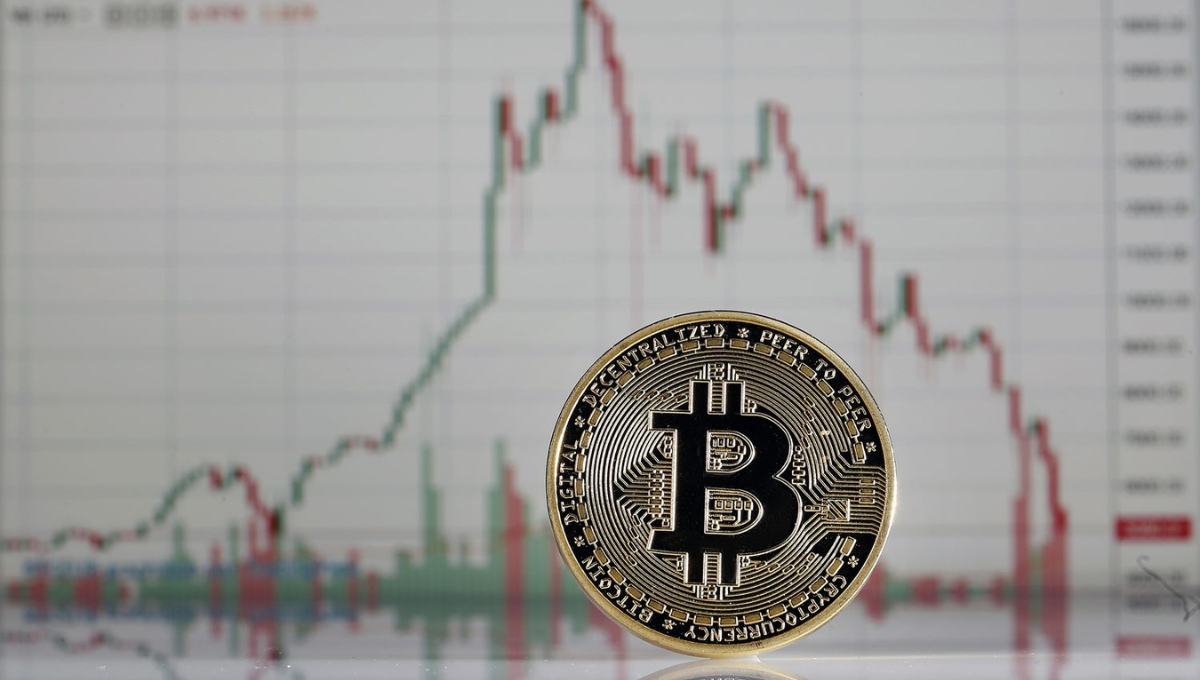
Bitcoin: (BTC), the largest and most influential cryptocurrency, dropped 1.6% to trade near $112,300. The decline came right after Cleveland Federal Reserve President Beth Hammack remarked that, if she were casting her vote today, she would not support cutting interest rates. These words were enough to send a wave of uncertainty across both traditional and crypto markets, especially during the Fed’s closely watched annual gathering at Jackson Hole.
Ethereum, Solana, and Ripple Follow Bitcoin’s Path
Bitcoin wasn’t the only digital asset caught in the storm. Ethereum (ETH), the second-largest cryptocurrency, fell by 2.6%, sliding to $4,230. Solana (SOL), which has been one of the strongest performers of the year, shed 3.5%. Ripple (XRP), another favorite among retail traders, lost 3.4% of its value.

This synchronized decline highlighted how sensitive the crypto market remains to broader economic signals. For many investors, crypto is still seen as a risk-heavy asset class, meaning that when uncertainty around monetary policy rises, digital currencies tend to suffer the consequences first.
The Fed’s Focus Inflation Over Employment
At the center of the discussion lies the Federal Reserve’s dual mandate: balancing employment levels while keeping inflation under control. Hammack pointed out that while job growth revisions might suggest some slowdown, the labor market overall remains steady, with unemployment holding at 4.2% in July. She emphasized that, in her view, there is no clear sign of economic weakness that would justify stimulating the economy with lower interest rates.
Instead, she argued for keeping the spotlight firmly on inflation. This stance, while reasonable from a policy perspective, sends a sobering signal to investors who had been betting heavily on imminent rate cuts. The message was loud and clear: inflation still matters more than anything else right now.
Market Expectations Take a Hit
Only a week ago, traders were nearly convinced that a September rate cut was all but certain. Market expectations had been running high, with a 92% probability priced in. But following Hammack’s remarks and the Fed’s cautious tone, that probability dropped to 73%.
Such a sharp shift in sentiment explains the immediate reaction in crypto markets. Bitcoin and other digital currencies thrive in low-interest-rate environments, as investors often flock to riskier assets in search of higher returns. When the prospect of cheaper borrowing and looser monetary policy fades, crypto valuations are among the first to feel the pressure.
All Eyes on Jerome Powell
While Hammack’s words rattled markets, the spotlight now turns to Federal Reserve Chair Jerome Powell. Scheduled to deliver his speech at Jackson Hole, Powell’s tone will be closely analyzed by traders, economists, and crypto enthusiasts alike.
Bitwise strategist Juan Leon suggested that Powell’s comments might lean “cautiously hawkish,” meaning he could strike a balance between acknowledging risks but ultimately reinforcing the need for tighter monetary policy. If that happens, cryptocurrencies could face additional headwinds, prolonging the current phase of volatility.
On the other hand, even a hint of dovishness or recognition that economic conditions may warrant some easing in the near future could provide relief to the crypto market. The stakes are high, and the uncertainty is palpable.
A Turning Point for Crypto
This moment feels like another turning point for digital assets. Investors are reminded, once again, that cryptocurrencies do not move in isolation. Global monetary policy, inflation reports, and employment data all carry significant weight in shaping their value. While many view Bitcoin as “digital gold,” its price behavior still shows that it is heavily influenced by broader market dynamics.
For long-term believers in blockchain technology and decentralized finance, such volatility is nothing new. The crypto market has weathered countless storms in the past, from regulatory crackdowns to economic crises, and each time it has found a way to recover. Still, the current environment serves as a reminder of just how fragile sentiment can be.
The recent drop in Bitcoin and other cryptocurrencies following the Fed’s Jackson Hole meeting underscores one simple truth: macroeconomic policy remains one of the most powerful forces driving crypto markets. Beth Hammack’s firm stance against premature rate cuts was a wake-up call for investors hoping for quick relief. Now, all eyes are on Jerome Powell’s upcoming speech, which could either deepen the storm or bring a ray of optimism.
Disclaimer: This article is for informational purposes only and should not be considered financial advice. Cryptocurrency investments carry significant risks, and individuals should conduct their own research or consult a professional before making investment decisions.
Also Read
Cryptocurrency News Live: Bitcoin, Ethereum, and Altcoins Face Market Dips
Bitcoin’s Treasury Power Why BTC Still Rules Over Ethereum in Corporate Adoption
Wendy Owusu’s Insight Bitcoin and Ethereum Shine While Investor Sentiment Tells Another Story